

With the continuous intensification of industrialization and population growth, the global climate is facing severe changes. Climate change refers to changes in the average state of the atmosphere and ocean systems over long-term timescales, specifically manifested as rising temperatures, altered precipitation patterns, and more frequent extreme weather events. This global environmental phenomenon poses a significant threat to socio-economic development, ecosystem stability, and human well-being. Therefore, we need to take proactive action to address climate change. In today's increasingly severe climate change environment, everyone can be a force for change.

Why is climate action so important?
According to data from the United Nations Framework Convention on Climate Change, rising global temperatures have led to more frequent extreme weather events. As individuals, our daily choices directly impact carbon emissions. The good news is that through some simple adjustments, everyone can be part of the solution.
What crises has climate change brought?
Continuously declining food production, making food a problem
Global climate change has severely impacted crop yields, driven up food prices, and directly affected our survival. The Intergovernmental Panel on Climate Change (IPCC) predicts that for every 1 degree Celsius increase in global average temperature, wheat yields will decrease by 6.0%, rice by 3.2%, corn by 7.4%, and soybean by 3.1%. By 2040, high temperatures will reduce global food production by 30%-40%.
Deadly Natural Disasters—Heat Waves
Heat waves are among the deadliest natural disasters, causing thousands of deaths annually. Heatstroke has become a frequent concern. According to research by the Lancet Countdown Asia Center team, between 1986 and 2005, Beijing averaged about 4 days of heat waves per year; this increased to about 15 days in 2022. Under the RCP8.5 high-warming scenario, the average number of heat wave days per year could increase to 40-50 days.
Other Extreme Weather Events Occur More Frequently
If extreme weather events are potential bomb threats, then climate change is an amplifier of these threats. Current mainstream global research suggests that as global warming continues, typhoon maximum wind speeds and precipitation are likely to continue increasing. Related simulations and theoretical analyses show that for every 1 degree Celsius increase in sea surface temperature, typhoon wind speeds will increase by 3% to 5%. In 2023, torrential rains and floods caused severe damage and casualties in many parts of the world.
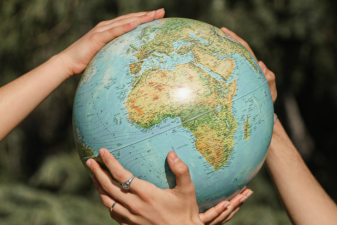
What Does Climate Action Include?
Climate action includes both mitigation and adaptation, which are complementary and indispensable.
Mitigation
Mostly refers to reducing greenhouse gas emissions from human activities, thereby mitigating and preventing climate change. This is the fundamental solution to the climate change problem. Mitigation actions include national-level efforts to promote energy structure transformation; corporate-level measurement and reporting of greenhouse gas emissions and increased use of renewable energy; and public-level practices such as energy conservation, emission reduction, low-carbon travel, and reducing the use of disposable items. As a long-term means of addressing climate change at its source, mitigation has always received widespread attention from society.
Adaptation
This is primarily based on the fact that climate change has already occurred and cannot be avoided in the short term. People must enhance their capabilities to better adapt to this change, thereby reducing the losses and impacts of climate change on life, property, and health. Adaptation actions include strengthening climate change monitoring, early warning, and risk management at the national level, and increasing investment in adaptive infrastructure; at the business level, developing operational contingency plans and shifting to flexible and adaptive supply chains; and at the public level, using air conditioning indoors during hot weather, reducing outdoor activities during typhoons, and preparing disaster relief supplies. As climate risks continue to intensify, adaptation actions are becoming increasingly urgent. World Meteorological Organization Secretary-General Petri Taalas stated, "We must intensify our efforts to help societies adapt to the unfortunate weather that has become the new normal."
Conclusion
In summary, given the enormous impacts of climate change on ecosystems, human health, and the economy, we urgently need to take action to reduce greenhouse gas emissions, mitigate the trend of climate change, and enhance adaptation capabilities. Through global cooperation and individual efforts, we can hope to create a sustainable, healthy, and prosperous future. Let us act together to create a better planet for future generations.